The Petare Market: Its History and Present
Learn the history of the Petare Market, how it evolved and its role as the commercial heart of the barrio to this day.

In this article 7
The Petare Market is one of the barrio's most emblematic places and a reflection of the history and vitality of its community. From its origins to its current role as the hub of commercial life in Petare, the market has witnessed the social and economic evolution of the area. Over the years it has served as a meeting point for residents, an economic engine and a place where tradition and modernity meet.
In this article we explore the history of the Petare Market, how it has evolved and its importance in residents' daily lives.
Origins and history of the Petare Market
The Petare Market — the municipal market — has its roots in the barrio's early settlements, when Petare began to grow as a farming community in the early 20th century. The first local traders, selling fresh produce and basic goods, set up an informal market that soon became a reference point for buying and selling in the region.
How it grew:
- Expansion in the 20th century: As the population grew and Caracas expanded eastward, Petare became a key commercial area. During the 1960s and 1970s the market established itself as the barrio's main trading center, attracting traders and shoppers from all over the city.
- Formalization: In the 1980s the market was formalized by local authorities, with a more organized structure for better management and control of trade. Pavilions were built and specific spaces assigned for different types of goods, from fresh food to clothing and household items.
💡Fun fact: Throughout its history, the Petare Market has been known for the variety of goods it offers, including a wide range of fruit, vegetables, meat and fish, as well as crafts and handmade clothing.
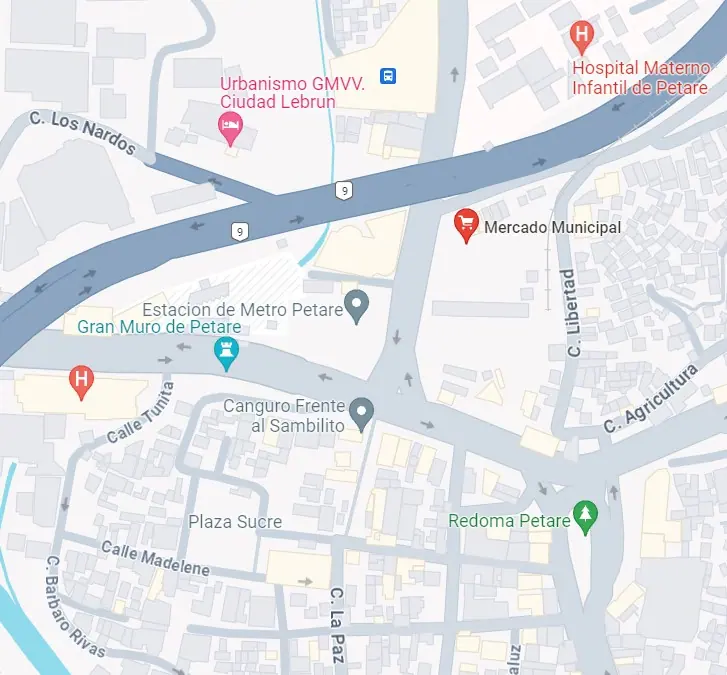
Location of the Petare Municipal Market
The Petare Market, or Mercado Municipal de Petare, is located in the historic center of Petare, near Plaza Sucre, in the heart of the barrio.
Layout and organization of the market
Today the Petare Market is a vast complex spanning several blocks with hundreds of stalls. Its layout reflects both the formal organization and the more informal side of trade in the barrio.
Market areas:
- Fresh food area: The busiest section, where traders sell fruit, vegetables, meat and fish. It is known for the freshness of its produce and the sellers' skill at haggling with shoppers.
- Clothing and household goods: Here you can find both new and second-hand goods, from clothes and shoes to appliances and furniture. It is a lively area where residents can find affordable products.
- Prepared food: The market also has food stalls serving typical Venezuelan dishes such as arepas, empanadas and cachapas. They are popular with market workers and visitors looking for a quick, cheap meal.
💡Fun fact: Despite its size and diversity, the Petare Market is still a place where you can find unique, traditional products such as local spices and medicinal herbs that are hard to find in other Caracas markets.
The market's economic role in the community
The Petare Market plays a fundamental role in the local economy, employing thousands of people and providing a vital source of income for many families in the barrio. Beyond being a trading center, it is also a social space where community ties are built and a sense of belonging is reinforced.
Economic impact:
- Jobs: Thousands of people work directly at the market as vendors, porters or in logistics and transport. For many Petare residents, the market is their main livelihood.
- Affordability and prices: The market offers goods at prices the local population can afford, which is crucial in a context where most Petare residents face economic hardship. Sellers' ability to negotiate and adjust prices to supply and demand is a key feature of the market.
Recent data: The Petare Market is among the busiest markets in Caracas, attracting not only local residents but also shoppers from other parts of the city.
Current challenges and the future of the market
Despite its importance, the Petare Market faces several challenges that threaten its sustainability and its ability to serve the community.
Challenges:
- Infrastructure and maintenance: The market's infrastructure, although extensive, needs urgent improvements. Many pavilions and stalls need repairs, and the lack of basic services such as drinking water and proper sanitation is a public health risk.
- Security: Security is a constant concern for both traders and shoppers. Crimes such as theft and extortion, sometimes linked to local gangs, have affected trust and the perception of safety at the market.
- Competition and modernization: With the spread of supermarkets and shopping malls elsewhere in Caracas, the Petare Market faces competition from more modern forms of retail. Adapting to new trends without losing its traditional character is a key challenge for the future.
Future opportunities:
- Renovation and modernization: Investing in the market's infrastructure and services could revitalize its role as an essential trading center for Petare and the surrounding areas.
- Promoting local tourism: The market has the potential to become a tourist attraction, showcasing Petare's culture and traditions to visitors from other parts of Caracas and international tourists.
💡Fun fact: Some recent projects have explored creating tourist routes in Petare that include visits to the market, where visitors can experience the barrio's daily life and taste local products.
Other markets in Petare
Although the Petare Municipal Market is the best known, Petare has other markets offering a wide variety of fresh produce, crafts and authentic local food.
Places such as the La Urbina Market and the Mesuca Market are must-visits for anyone who wants to immerse themselves in the daily life of this vibrant community. Exploring these markets is a great way to learn more about local culture and traditions.
➡️Learn more about other markets in Petare
Summary
The Petare Market is much more than a place to trade; it is a symbol of its community's history, culture and resilience. Over the years it has grown from an informal market into the hub of Petare's economic and social life. Despite the challenges it faces, its adaptability and importance to residents ensure it will remain a cornerstone of the barrio. With modernization efforts and community support, the market has the potential to keep thriving and to serve as a model of how traditional spaces can adapt to the needs of the present and the future.