Chapel of Santa María Magdalena
Discover the Chapel of Santa María Magdalena, a colonial church in Petare with sacred art and local legends.
In this article 4
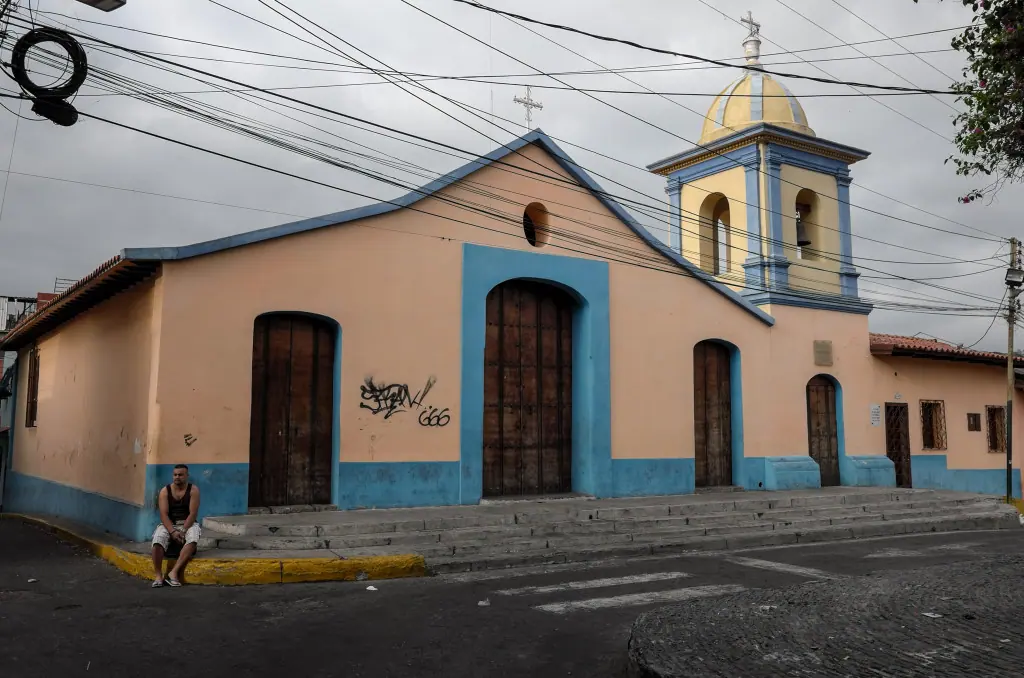
The Chapel of Santa María Magdalena (Saint Mary Magdalene), in the heart of Petare, is one of the oldest and most emblematic buildings in the town. This historic church has not only been a spiritual meeting place for the community but also a witness to the changes and challenges that have marked its history over the centuries. Besides its spiritual importance, the chapel stands out for its colonial architecture and for holding an invaluable artistic heritage, including religious sculptures and valuable silverwork.
Below is a detailed look at the chapel, its history, its architecture and the features that make it unique in Venezuela's cultural landscape.
History of the Chapel of Santa María Magdalena
The Chapel of Santa María Magdalena, on the corner of Guanche and Pacheco streets, was promoted by Marcos José Tovar, José Tovar, Marcos Padrón, Manuel Muñoz, José Agustín Monegüi and the priest José de la Santísima Virgen, who on 18 March 1785 proposed to the corregidor Antonio Xedler the construction of a sanctuary dedicated to Saint Mary Magdalene.
A devastating earthquake in 1812 almost completely destroyed the chapel, just as it was about to be blessed. Manuel Muñoz paid for its reconstruction, completed in 1816, and the parish priest Salvador Delgado asked Archbishop Narciso Coll y Prat to consecrate it.
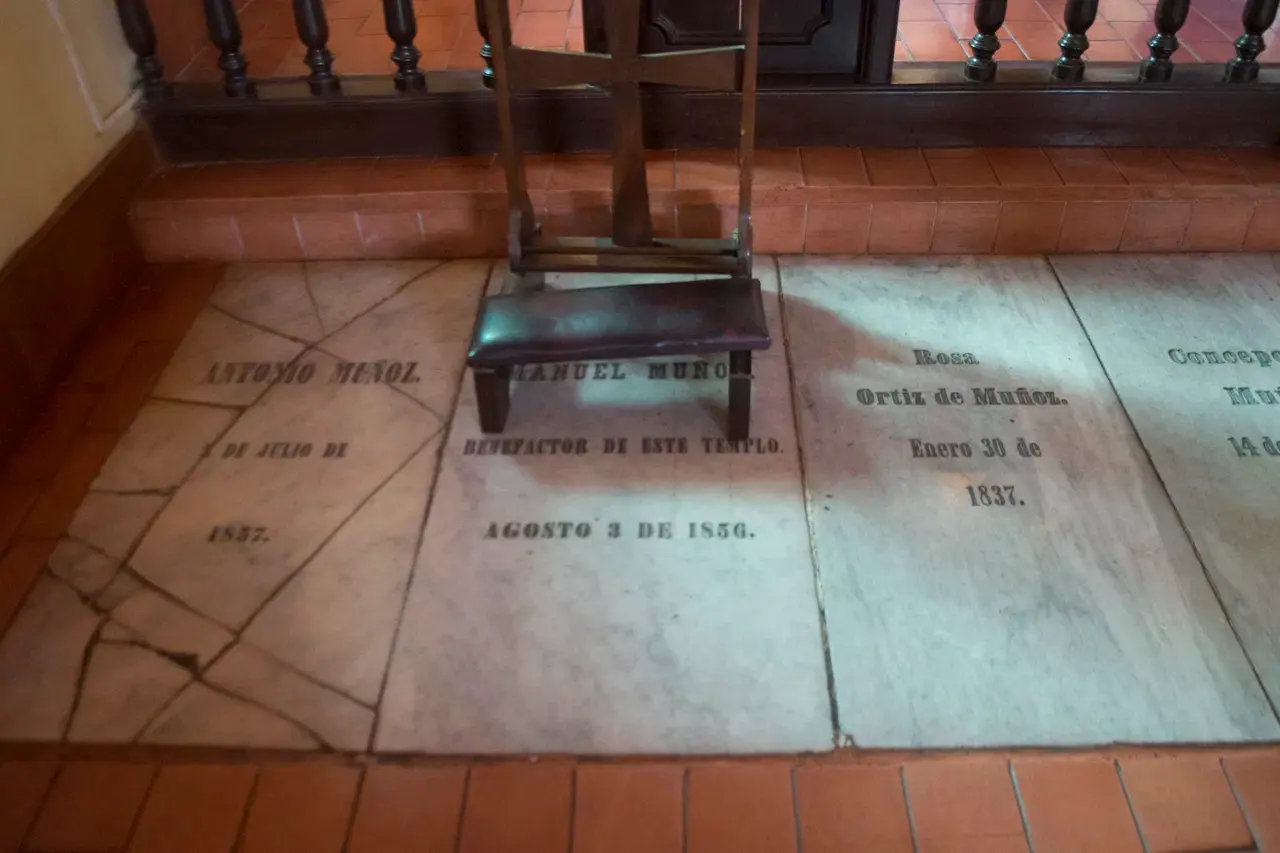
By 1830 the chapel needed another restoration, which was undertaken by Concepción Muñoz, Manuel's younger sister, known for her generosity and charity towards the people of Petare. In 1854 the chapel welcomed Friar José Maraury, remembered for more than three decades of selfless dedication, especially at the Hospital de la Caridad, where he cared for the poor and destitute.
After his death in 1888 he was succeeded by Father Manuel José Ávila, who served until 1890, and then by the priest José Denis Franchi, who died in 1902. Father Antonio Marín then took over, following Friar José Maraury's example and devoting himself to those most in need. He was followed by Father Feo, who stayed only briefly, then Father Valbuena, followed by Alejandro Beretta and Fausto Gori, both much loved by the community.
In the 1950s, under the government of Marcos Pérez Jiménez, the chapel's roofs and floors were replaced and the structure was reinforced with reinforced concrete pillars. The chapel was declared a National Historic Monument on 2 February 1960, according to Official Gazette No. 26,320. It was finally reopened on 28 July 1999 after a restoration involving more than a hundred volunteers, including architects, historians and community members. Today the chapel has no chaplain and is run by the Sisters of the Guadalupan Mission of the Holy Spirit.
Architectural features
The chapel is divided into three naves separated by two rows of cylindrical columns; each row has three full columns and two half-columns. To the west, a section the size of the tower houses the sacristy and a storeroom.
The façade has three arched doors, the central one — leading to the main nave — being the tallest and framed by a rectangular relief. Above it is an oval oculus. The building has no frontispiece, and the two slopes of the roof are visible. The bell tower has two sections: the first with a door and the second decorated with flat Tuscan pilasters on pedestals supporting a cornice decorated with dentils. In the center of each side of the tower is an arched opening. The tower supports a brick dome divided into eight segments, topped by a finial and a metal cross.
The chapel's main structure consists of rammed-earth walls reinforced with concrete pillars and brick columns. The roof is made of metal rafters and collar ties, with wooden beams and tie rods, covered with clay tiles. The floor is made of red cement tiles.
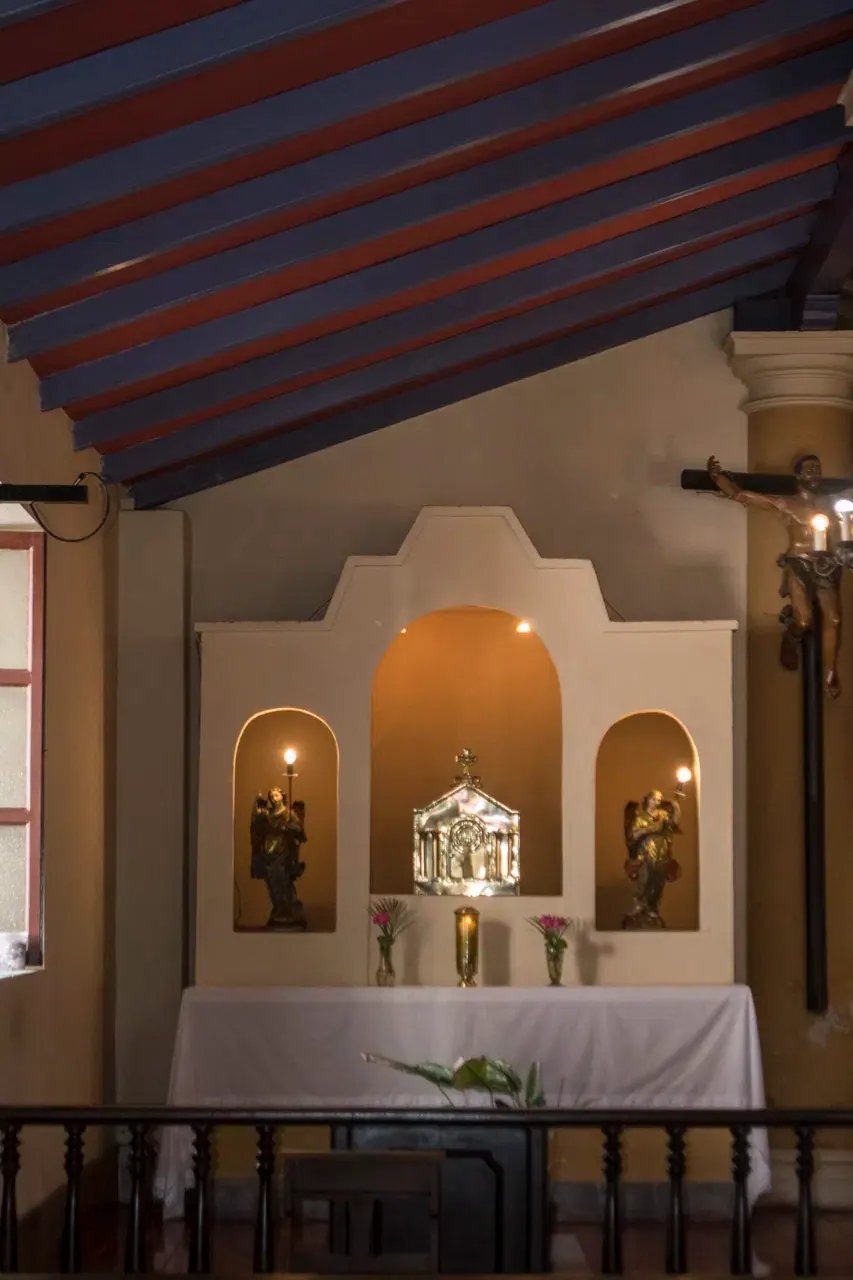
Pieces of historical interest
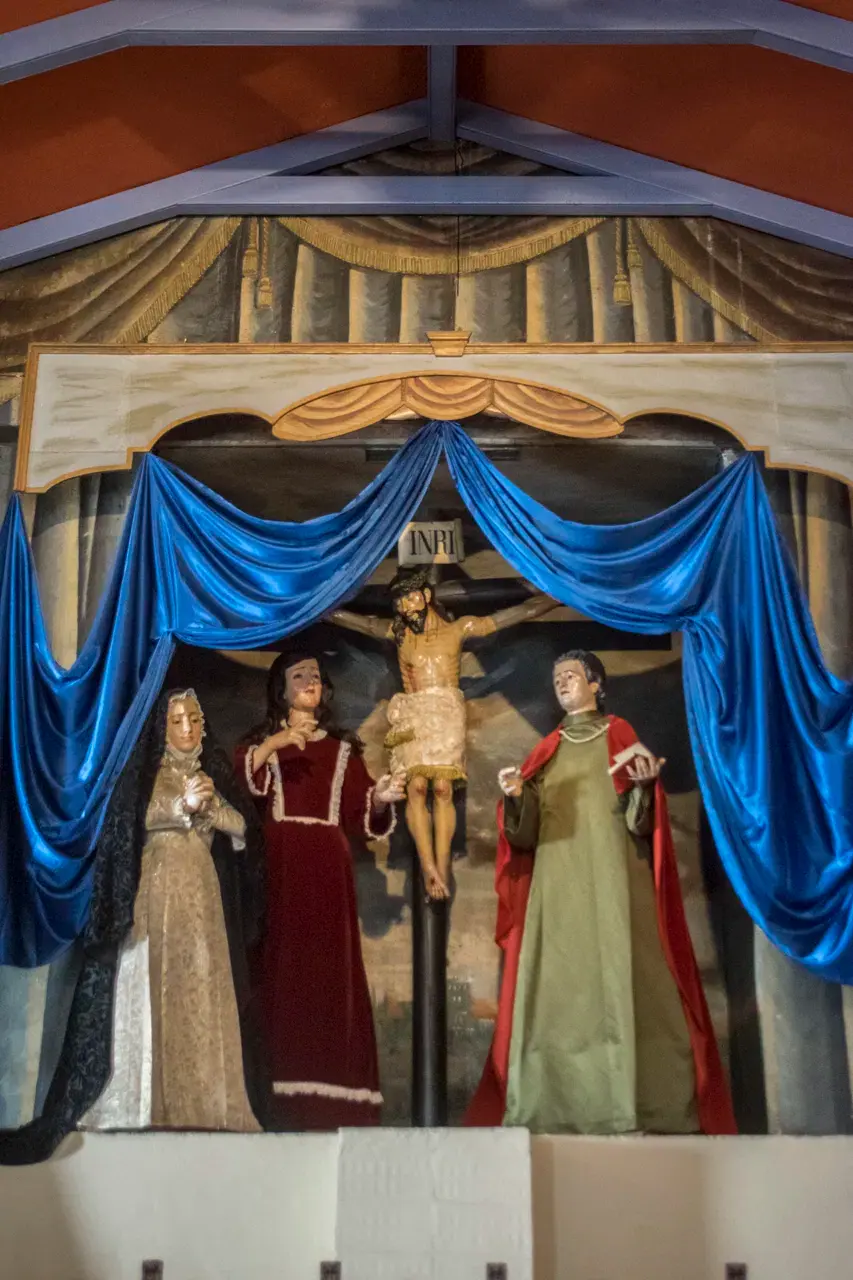
The Chapel of Santa María Magdalena is unique in Venezuela, as it contains a complete representation of the final scene of Jesus Christ on the cross. Made in the 18th century, the work is a magnificent example of Spanish polychrome wood carving and is made up of the figures of Jesus on the Cross, Mary Magdalene, Our Lady of Sorrows and Saint John, together with the thieves Gestas and Dismas.
Other notable pieces include the figures of Saint Anne with the Child Virgin, in the eastern nave, and the image of Saint Iphigenia, in the western nave.
Legends
Several chronicles and legends surround the Chapel of Santa María Magdalena, also known as the Capilla del Calvario (Calvary Chapel). According to Coromoto Méndez Sereno, chronicler of the Sucre Municipality, the Crucifixion services were held at this sanctuary during Holy Week. The faithful climbed in procession up the slope of today's Calle Guanche, recreating Christ's steps to Golgotha.
There is also a popular legend in Petare that tells how, while the Calvary Chapel was being repaired, the Devil took on various forms to bother the workers and delay the work. Sometimes he appeared as a little boy, at other times as a donkey or as strange characters who distracted the workers. According to the legend, Friar José Maraury recognized Satan in disguise and, as punishment, struck him with his rope. On another occasion he discovered him in the form of a donkey and made him carry heavy stones for a whole day.