Jermán Ubaldo Lira: Petare's Great Musician
The life of Jermán Ubaldo Lira, composer and chapel master who shaped Venezuelan music from Petare.
In this article 5
Jermán Ubaldo Lira was one of Venezuela's most influential musicians, known for his contribution to sacred and popular music. Throughout his life he not only left an invaluable artistic legacy but also trained generations of musicians through his bands and his work as chapel master.
In this article we explore his life, his work and his impact on Venezuela's musical culture.
Jermán Ubaldo Lira: Petare's most important musician
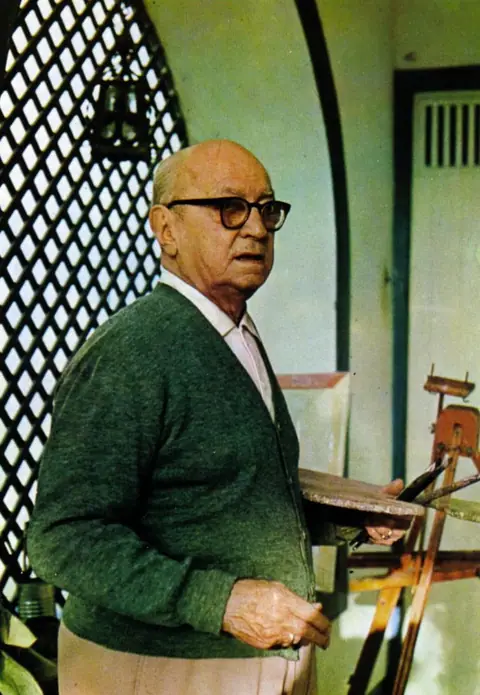
Jermán Ubaldo Lira is undoubtedly the most important musician Petare has given Venezuela. He was born on 29 May 1867 in a small house on Calle El Oro in Petare. The son of Rosalía Camacho and the distinguished composer Celestino Lira, it was his father who discovered Jermán's musical talent at a very young age and taught him his first notions of music.
Later, Lira took lessons in music theory, solfège, composition and conducting with maestro José María Velásquez, of the Chacao School, inheriting valuable musical techniques passed down through generations. His dedication enabled him to master up to four wind and string instruments.
Career and life in Petare
To continue his musical studies, Lira moved to Caracas, where he lived in difficult conditions, which led him to combine his passion for music with learning the tailor's trade. Back in Petare, he helped his father as chapel master at the Church of Dulce Nombre de Jesús and opened a small tailor's shop on Calle El Comercio (today Avenida Francisco de Miranda).
In 1893 his father founded the Santa Cecilia Philharmonic Union Orchestra, which Jermán Ubaldo joined as a violinist alongside leading musicians such as Ángel María Landaeta and Manuel Yélamo. In 1895 he married Ana Teresa Arvelo.
After his father's death in 1898, Jermán Ubaldo Lira inherited the post of chapel master at the Petare church, which he held for ten years. In 1908 he was called to Ocumare del Tuy to organize the Miranda State Military Band, moving to Calle El Palmar (today Calle Bolívar). The band's performances were acclaimed by ordinary people and distinguished families alike.
Compositions and notable works
In 1909 Jermán Ubaldo Lira composed the Official Anthem of Miranda State, with lyrics by poet Jacinto Áñez, premiered at a ceremony honoring Francisco de Miranda. Back in Petare in 1910, he resumed his role as chapel master and founded the Banda 5 de Julio in 1912, made up of young musicians. In 1927 he created the Banda Sucre, which performed concerts in several cities of the state until the municipality withdrew its support in 1943. Even so, the band kept playing at religious events and patron saint festivals.
Lira composed a wide variety of music, excelling in religious, instrumental, lyrical and popular genres. His most notable sacred work is the Miserere, adopted for the Holy Wednesday services at the Basilica of Santa Teresa. He also wrote waltzes, joropos and pasodobles such as Tu corazón, Cielos sin nubes, Alacrán and Homenaje a Guarenas.
Honors and legacy
Throughout his career Jermán Ubaldo Lira received many honors, including the Order of Francisco de Miranda, the Medal of Merit of the Government of Miranda State and the Gold Plaque of the Government of Miranda. In 1966 the Sucre District House of Culture was named after him, and the Sucre District Municipal Band also took his name.
His life was marked by deep dedication to music and teaching, passing his legacy on to generations of musicians.
Jermán Ubaldo Lira died in Petare on 17 March 1970, aged 102, leaving an indelible mark on Venezuela's musical history.
Summary
Jermán Ubaldo Lira is a key figure in Venezuelan music, not only for his vast artistic output but also for his role in training new generations of musicians. His musical legacy, deeply rooted in Petare, ranged from sacred music to popular genres, establishing him as one of the great musicians in the country's history.